Unlearning the Familiar: What American Contractors Discover When They Start Sourcing Concrete From Istanbul
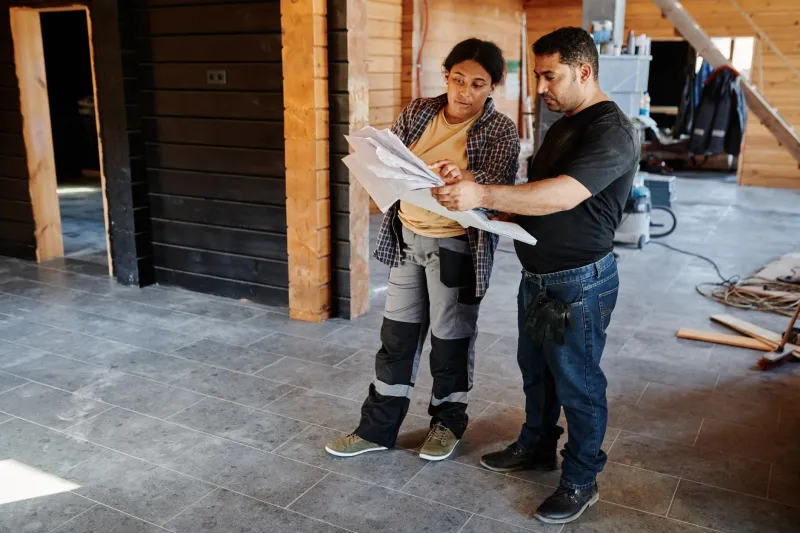
For most American contractors, concrete knowledge is inherited. It comes from decades of working with the same regional suppliers, reading the same spec sheets, and trusting the same rule-of-thumb assumptions passed down from senior project managers. That inherited knowledge is not wrong, exactly—but it is incomplete in ways that only become apparent when a contractor steps outside the domestic supply chain.
That is precisely what is happening across job sites from the Pacific Northwest to the Gulf Coast. A growing cohort of American builders, driven by quality concerns and supply chain instability, has begun sourcing concrete materials from Istanbul-based suppliers. And almost universally, they describe the experience in terms that go beyond logistics: they call it a learning curve. A genuine recalibration of how they think about the material beneath their feet.
The Assumptions That Don't Cross the Atlantic
When contractors first engage with Istanbul Beton, the initial conversations often reveal a set of assumptions so deeply embedded that most builders have never thought to question them. Chief among these is the belief that compressive strength is the primary—sometimes the only—metric worth tracking.
"I had always ordered concrete by the PSI number," recounts a commercial general contractor based in Phoenix who began sourcing through Istanbul Beton in 2022. "Six thousand PSI meant good concrete. I didn't think much beyond that. When the Istanbul team started talking about sulfate resistance, alkali-silica reactivity, and long-term carbonation depth, I realized I had been reading a book by only looking at the cover."
This experience is not unusual. American concrete specifications, particularly for mid-tier commercial projects, have historically leaned on a narrow band of performance indicators. Domestic suppliers, accustomed to serving clients who ask the same questions in the same order, rarely volunteer information outside that band. The result is a knowledge ecosystem that is self-reinforcing—and quietly limiting.
Turkish formulations, by contrast, are engineered for environments that demand broader performance profiles. Istanbul itself sits at the intersection of seismic zones, aggressive marine air, and dramatic seasonal temperature swings. Concrete developed for that context carries a different set of embedded assumptions—assumptions about durability, chemical resistance, and long-term structural integrity that American contractors find both unfamiliar and, once understood, invaluable.
Where the Learning Curve Hits Hardest
The steepest part of the transition, contractors report, is specification literacy. Reading and interpreting Turkish technical documentation—even when translated into English—requires familiarity with European and international standards that most American builders have never encountered professionally.
EN 206, the European standard governing concrete performance and production, differs meaningfully from ASTM C94 and ACI 318, the frameworks most American contractors know by heart. Exposure classes, consistency classes, chloride content designations—these are not simply different labels for familiar concepts. They reflect a genuinely different philosophy of how concrete performance should be categorized and communicated.
Istanbul Beton addresses this gap directly. The company provides structured technical onboarding for new American clients, including annotated specification comparisons, standard crosswalk documents that translate between EN and ASTM frameworks, and direct access to materials engineers who can walk procurement teams through the implications of each parameter. For contractors who have spent careers trusting a single page of spec data, this level of documentation can feel overwhelming at first—and then, quickly, indispensable.
"The first time I got a full technical data package from Istanbul Beton, I didn't know what half of it meant," says a project manager at a mid-sized infrastructure firm in Ohio. "I called their technical support line expecting a sales pitch. Instead, I got a forty-five-minute conversation with an engineer who walked me through every section. By the end, I understood my own project requirements better than I had before."
On-Site Education as Competitive Advantage
The knowledge transfer does not stop at the procurement desk. Istanbul Beton extends its technical support into the field, providing on-site guidance for contractors navigating the practical realities of working with unfamiliar mix designs. Curing protocols, admixture interactions, temperature adjustments for placement in high-heat or cold-weather conditions—these are areas where even experienced crews benefit from manufacturer-specific guidance.
Several contractors describe this on-site education as a turning point in how their teams approach concrete quality broadly. When workers understand why a curing blanket is left in place for a specific number of hours—not just that it is required—they are more likely to follow the protocol consistently. When foremen can articulate the relationship between water-cement ratio and long-term permeability, they make better decisions in the field without waiting for an engineer to weigh in.
This elevation of general material literacy has downstream effects that extend beyond any single project. Contractors who have completed the Istanbul Beton onboarding process report that their teams are better equipped to evaluate all concrete suppliers, domestic or international—to ask sharper questions, interpret test results more critically, and identify potential quality issues before they become costly problems.
Misconceptions That Had to Be Unlearned
Perhaps the most consistent theme across contractor accounts is the process of actively unlearning. Certain assumptions, once examined, turn out to be more habit than fact.
One of the most common: the belief that locally sourced concrete is inherently fresher or more reliable because of proximity. In practice, domestic supply chains carry their own variability risks—batch inconsistencies, aggregate substitutions, and quality control gaps that are rarely disclosed proactively. Distance, it turns out, does not determine quality. Process discipline does. Turkish suppliers operating under EN 206 certification frameworks are subject to documentation and audit requirements that many American producers do not face.
Another misconception involves the role of admixtures. Many American contractors have been conditioned to view admixtures as optional enhancements—a way to adjust workability or set time on the fly. Turkish formulations treat admixtures as integral performance components, engineered into the mix design from the outset rather than added at the batch plant as an afterthought. Understanding this distinction changes how contractors evaluate mix designs and how they communicate requirements to their crews.
The Knowledge Gap as a Market Differentiator
There is a competitive dimension to all of this that forward-thinking contractors are beginning to recognize. In a market where most builders are working from the same limited knowledge base, those who invest in deeper material literacy—who can read a full technical data sheet, who understand the difference between characteristic strength and target mean strength, who know how to evaluate a concrete supplier's quality management system—occupy a distinct professional advantage.
Clients notice. Architects and structural engineers notice. Risk managers at insurance firms notice. The ability to speak with precision about concrete performance is no longer a niche skill. It is becoming a differentiator in competitive bid environments.
Istanbul Beton's approach to contractor education is, in this sense, not simply a customer service function. It is an investment in the professional development of the American construction community—one that happens to produce better-informed, more loyal clients as a byproduct.
The concrete classroom, it turns out, has no walls. It runs from the batch plant in Istanbul to the job site in Cleveland, and the curriculum is as practical as it is rigorous. For American contractors willing to sit in that classroom, the lessons have a way of changing everything.