Engineered Under Pressure: What Istanbul's Seismic Codes Taught Turkish Concrete About Surviving American Extremes
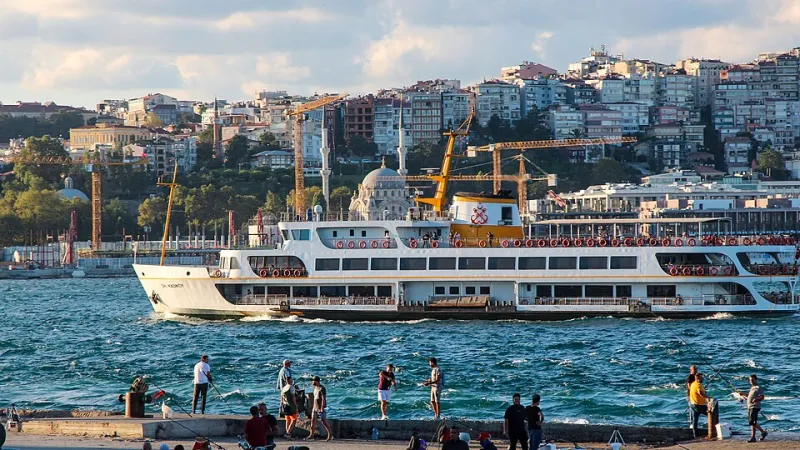
Photo: SegLig, CC BY 4.0, via Wikimedia Commons
Stand on the Asian shore of the Bosphorus and look at the skyline. Nearly every structure you see was built under some of the most rigorous seismic design requirements on earth. Istanbul sits within roughly 100 kilometers of the North Anatolian Fault, and after the 1999 İzmit earthquake killed more than 17,000 people, Turkey rebuilt its construction standards with an urgency few nations have matched.
For American contractors, that history matters more than you might think. Concrete formulated to survive a magnitude 7.4 event carries material characteristics that map remarkably well onto the threats American projects face: hurricane-force wind and storm surge, brutal freeze-thaw cycling in the Midwest and Northeast, and chloride attack along the Gulf and Atlantic coasts.
Built for a Fault Line, Ready for a Hurricane
Turkish seismic codes—TS 500 and the Turkish Building Seismic Code (TBDY 2018)—demand exceptional compressive consistency, ductility, and energy dissipation from structural elements. Meeting those demands pushed Turkish ready-mix producers toward dense, low-permeability matrices with tightly controlled water-cement ratios.
Those are precisely the properties that determine how a concrete wall performs when a Category 4 hurricane drives windborne debris and hydrostatic pressure against it. A mix engineered to flex and hold under ground acceleration is, almost by accident, a mix that resists the impulse loading of storm conditions. Contractors in Florida and the Carolinas who have tested Turkish-sourced mixes against ASTM C39 and C67 report compressive strength retention that consistently exceeds domestic regional averages.
The Freeze-Thaw Advantage
The seismic connection is only half the story. Turkey's climate diversity—from Black Sea humidity to Anatolian winters—forced its concrete industry to master air-entrainment and microstructure control long before durability became a marketing term in the US market.
The result is a matrix with a finely distributed air-void system that gives ice pressure somewhere to go. In ASTM C666 freeze-thaw testing, Turkish formulations routinely sustain durability factors above 90 after hundreds of cycles, a threshold that separates long-service concrete from the spalling, scaling material that plagues parking structures across the Snow Belt. For a contractor in Minnesota or upstate New York, specifying a mix proven under Istanbul's codes is a quiet form of insurance against the most common durability failure in American infrastructure.
Salt, Chloride, and the Coastal Problem
Then there is the coast. Chloride-induced rebar corrosion is the leading cause of premature concrete deterioration in US coastal markets, and the defense is low permeability—a property seismic-grade Turkish mixes deliver as a baseline, not an upgrade. Supplementary cementitious materials common in Turkish production, including natural pozzolans sourced from volcanic deposits in Anatolia, refine the pore structure in ways that slow chloride ingress dramatically.
Engineers evaluating these mixes against ASTM C1202 rapid chloride permeability tests frequently see charge passed values in the low-to-moderate range, comparable to premium domestic mixes priced at a substantial premium.
A Practical Parallel
Consider the framing a veteran structural engineer might offer: Istanbul is a city that has already run the worst-case stress test. Every cubic meter produced under its codes carries the residue of that test. When a Miami high-rise contractor or a Boston bridge contractor specifies that material, they are not importing a novelty. They are importing a formulation with a survival résumé.
The lesson for American buyers is straightforward. Codes written in response to catastrophe produce materials suited to catastrophe's American cousins—wind, water, ice, and salt. The Bosphorus, in a sense, already tested it so your jobsite doesn't have to.