The Cost of Cheap: Why Low-Bid Concrete Procurement Is Becoming a Long-Term Liability Strategy
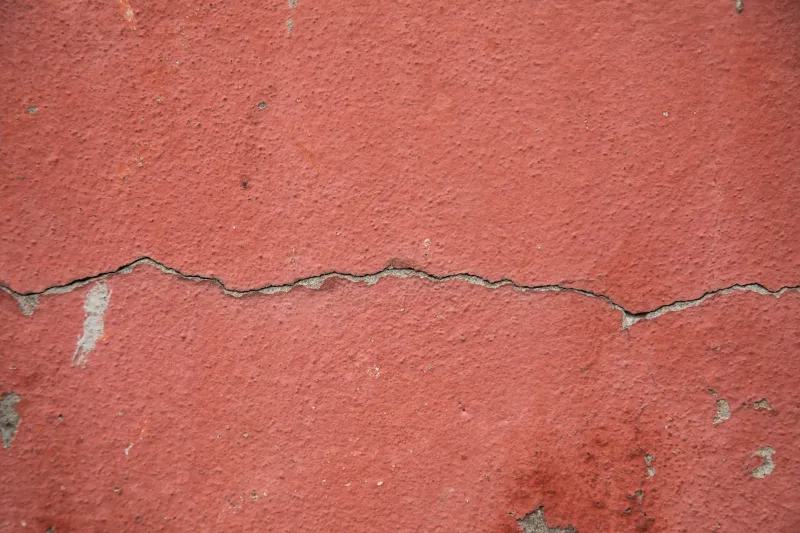
There is a particular kind of optimism embedded in the low-bid procurement model. It assumes that concrete is concrete—that the commodity nature of the material means differences in price reflect differences in margin, not differences in quality. This assumption has driven procurement decisions across American construction for generations. It has also generated an enormous and largely unacknowledged stream of long-term costs that rarely appear in the same budget line as the original savings.
The reckoning is arriving. As warranty periods extend, as climate conditions intensify, and as structural failures attract litigation with longer discovery timelines, the financial consequences of specification compromises made years earlier are becoming visible in ways they were not before. The industry's relationship with cheap concrete is becoming complicated.
What the Bid Price Doesn't Capture
The fundamental problem with low-bid procurement is that it optimizes for a single moment in the project timeline: the point at which the contract is awarded. Everything that happens after that moment—the pour, the cure, the service life of the structure, the maintenance schedule, the eventual repair or replacement—is excluded from the calculation.
This is not an accounting oversight. It is a structural feature of how construction projects are financed and how responsibility is distributed across the parties involved. The contractor who wins the bid is rarely the party who pays for a failing parking deck fifteen years later. The developer who approved the value-engineered specification is not necessarily the entity that owns the building when the repair bill arrives. The incentives are misaligned in ways that systematically favor short-term cost reduction over long-term performance.
Premium concrete formulations—those engineered for specific climatic conditions, high traffic loads, chemical exposure, or extended service life—carry higher unit costs. This is not a market inefficiency. It reflects genuine differences in material composition, quality control rigor, and the engineering investment required to produce consistent, verifiable performance. The question is not whether premium concrete costs more at the point of purchase. It does. The question is whether it costs more over the life of the structure.
The Lifecycle Arithmetic
American infrastructure data provides a useful context for this question. The Federal Highway Administration has documented repair costs for concrete pavements and bridge decks that consistently exceed original construction costs when substandard materials are involved. The repair cycle for poorly specified concrete in high-freeze-thaw environments—a condition relevant across much of the northern United States—typically begins within five to eight years of placement. Each repair cycle carries not only direct material and labor costs but also indirect costs: traffic disruption, liability exposure during the repair period, and accelerated deterioration of adjacent structural elements.
For commercial and residential construction, the arithmetic is similarly unfavorable for low-specification materials. A concrete foundation that begins exhibiting permeability failures within a decade of construction creates a cascade of consequences: moisture intrusion, mechanical system damage, potential structural compromise, and the legal and reputational costs of addressing owner claims. The original savings on the concrete specification are typically consumed many times over.
Conversely, premium formulations with documented performance characteristics—verified compressive strength, controlled permeability, demonstrated freeze-thaw resistance—tend to flatten the maintenance curve. Structures built to higher specifications simply require less intervention over their service lives. The cost advantage of the premium material accrues gradually, in the form of costs that don't occur.
Climate Pressure Is Accelerating the Reckoning
The intensification of weather extremes across the United States is compressing the timeline on which specification compromises become visible. Concrete that might have performed adequately under historical climate conditions is being exposed to freeze-thaw cycles of greater frequency, heat events of greater intensity, and precipitation events of greater volume. Materials that were specified to the minimum acceptable standard are encountering conditions that exceed their design parameters.
This is not a theoretical concern. American contractors working in coastal markets, mountain regions, and northern urban centers are reporting accelerated deterioration in structures built with minimum-specification materials over the past decade. The pattern is consistent with what material scientists have been predicting: as climate conditions shift, the performance margins built into premium formulations become structurally important rather than merely desirable.
Istanbul Beton's formulations are engineered in an environment that has long demanded material resilience. Istanbul's position at the intersection of European and Asian climate systems, combined with its demanding urban infrastructure requirements, has produced concrete chemistry that is tested against conditions comparable to or exceeding those found in American climate zones. The performance data from those environments translates directly to American project requirements.
Reputational Risk and the Contractor's Balance Sheet
Beyond the direct costs of repair and litigation, the reputational consequences of concrete failures are increasingly material to contractor economics. In an industry where referral relationships and track records drive business development, a high-profile structural failure—even one that is ultimately attributed to supplier negligence—damages the contractor's standing in ways that are difficult to quantify and impossible to fully recover.
Contractors who have shifted their procurement philosophy toward performance-based specifications report a different kind of competitive advantage: the ability to offer owners extended warranties, to document material quality at a level that reduces owner anxiety, and to build a track record of problem-free project completions that supports premium pricing on future bids. The investment in higher-quality materials becomes, in this framing, a business development strategy as much as a risk management one.
The Revaluation in Progress
The low-bid model is not disappearing. It is deeply embedded in public procurement requirements and private developer culture alike. But the terms of the conversation are shifting. Owners who have experienced the downstream costs of specification compromises are writing performance requirements into their contracts with greater specificity. Structural engineers are specifying mix parameters that cannot be met by the cheapest available option. Insurance underwriters are beginning to ask questions about material sourcing that they did not ask a decade ago.
For contractors navigating this transition, the strategic question is straightforward: at what point does the risk associated with minimum-specification concrete exceed the cost differential of the premium alternative? The evidence increasingly suggests that point arrives much earlier in the project lifecycle than traditional procurement models acknowledge.