American Labs Are Putting Turkish Concrete to the Test—and the Results Are Changing Procurement Decisions

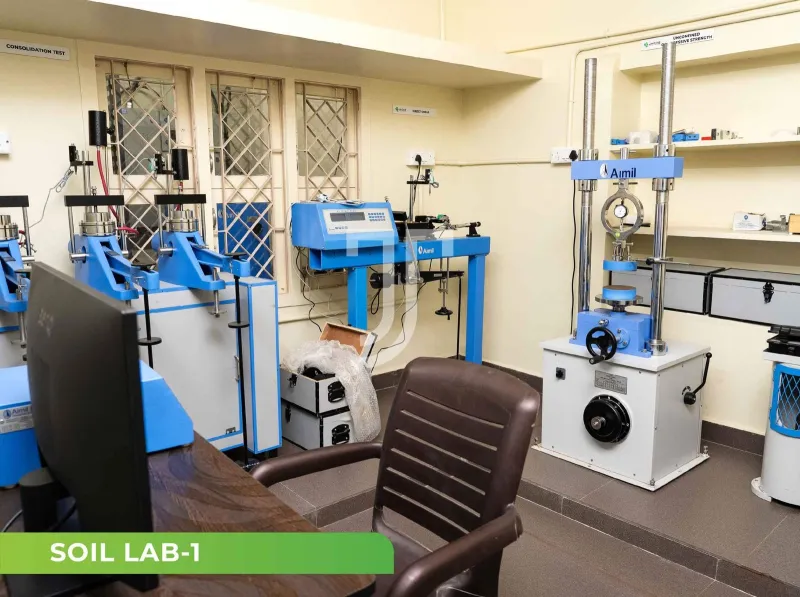
For decades, the default assumption among American procurement teams was straightforward: if a concrete product did not originate from a domestic supplier with a familiar certification trail, it carried unquantifiable risk. That assumption is now under serious pressure. Across the United States, independent testing laboratories and university-affiliated materials research centers are subjecting Turkish concrete formulations to the same battery of evaluations they apply to any premium domestic product—and the results are prompting a quiet but consequential reassessment.
At Istanbul Beton, we have observed this shift firsthand. Procurement managers who once viewed international sourcing as a compliance burden are now arriving at conversations with third-party test reports in hand, asking detailed questions about mix design rationale, admixture sourcing, and long-term performance projections. The science, it turns out, is doing a great deal of the persuasion work.
What Is Actually Being Tested—and Why It Matters
Understanding why American labs are increasingly running evaluations on Turkish formulations requires a brief look at what those evaluations involve. Standard concrete testing in the United States follows protocols established by ASTM International, the organization responsible for setting material and testing standards across industries. For concrete specifically, key standards include ASTM C39 for compressive strength, ASTM C666 for freeze-thaw resistance, and ASTM C1202 for chloride ion penetrability—a proxy measure for long-term durability in corrosive environments.
Turkish concrete producers have, for some time, been manufacturing to parallel European standards under the EN 206 framework. While EN 206 and ASTM protocols are not identical, they share a rigorous underlying philosophy. When Turkish mixes are submitted to ASTM-aligned testing, the translation between frameworks is manageable—and the performance data generated is directly interpretable by American engineers.
What labs are finding, repeatedly, is that Turkish formulations often incorporate supplementary cementitious materials—volcanic pozzolans, natural zeolites, and finely ground blast furnace slag—that are either underutilized or entirely absent in many domestic commodity mixes. These materials alter the microstructure of hardened concrete in ways that standard compressive strength tests do not fully capture, which is why expanded test panels are increasingly being requested.
The Certification Pathway: Navigating Standardization Challenges
One of the legitimate complexities in validating Turkish concrete for American projects is the absence of a single, universally recognized certification equivalency framework. Unlike pharmaceutical or aerospace industries, where international harmonization bodies provide clear cross-referencing mechanisms, construction materials operate under a patchwork of regional and national standards.
For Turkish suppliers working with American partners, the practical pathway typically involves three layers of verification. First, the supplier must provide documentation of manufacturing quality management under ISO 9001 or, more specifically, ISO 14001 for environmental management—both of which are widely held among reputable Turkish producers. Second, representative samples of the specific mix design intended for the American project are submitted to an accredited US laboratory for ASTM-protocol testing. Third, the resulting test reports are reviewed by the project's engineer of record, who makes a determination of equivalency or specification compliance.
This process is neither prohibitively expensive nor unusually time-consuming when managed correctly. A full ASTM test panel for a single mix design—covering compressive strength at multiple cure ages, flexural strength, and durability indicators—can typically be completed within three to four weeks. For projects with sufficient lead time, this verification window is entirely workable.
The standardization challenge, such as it is, lies primarily in documentation translation and in educating procurement teams about what the test results actually mean. This is an area where suppliers with established American partnerships, and with technical representatives capable of engaging directly with US-based engineers, hold a meaningful advantage.
Performance Metrics That Domestic Suppliers Often Underemphasize
Perhaps the most revealing aspect of the current testing wave is what the data consistently highlights about performance dimensions that American commodity concrete suppliers have historically treated as secondary.
Chloride ion penetrability—measured by the ASTM C1202 rapid chloride permeability test—is a case in point. In coastal American markets, in infrastructure projects exposed to road salts, and in below-grade construction where groundwater chemistry is a concern, low chloride permeability is directly correlated with service life extension and reduced maintenance costs. Turkish mixes incorporating natural pozzolans routinely achieve "Low" or "Very Low" classifications on this test, categories that many standard domestic ready-mix products do not consistently reach.
Similarly, freeze-thaw durability testing under ASTM C666 is revealing performance margins that matter enormously in northern US markets—the Upper Midwest, New England, and the Mountain West, where thermal cycling is a primary deterioration mechanism. Turkish formulations designed for Istanbul's own variable climate, which includes cold winters and significant humidity, transfer well to these American contexts.
Autogenous shrinkage, the tendency of concrete to contract during the hydration process without any external drying, is another metric receiving increased attention. High-performance mixes with lower water-to-cementitious ratios—a hallmark of Turkish premium production—exhibit reduced autogenous shrinkage, which translates directly to fewer early-age cracks and a more durable finished structure.
What Engineers Are Saying After Reviewing the Data
The engineers and materials consultants who have engaged most directly with Turkish concrete test data tend to share a common observation: the results are consistent. Consistency across multiple test batches, across different production runs, and across independently conducted evaluations is, in many respects, more significant than any single performance figure.
Variability is the adversary of structural confidence. A mix design that achieves exceptional compressive strength in one test but shows significant variation across replicate samples provides little practical assurance. Turkish producers with well-established quality management systems—systems that have been audited, documented, and refined over years of export-oriented production—tend to deliver narrow confidence intervals on their performance data. For an engineer signing off on a specification, that consistency is the credibility signal that matters most.
Procurement managers, for their part, are finding that third-party test reports serve a dual function: they satisfy the technical requirements of the project's specification, and they provide a defensible record in the event that material performance is ever questioned. In an industry where liability considerations are ever-present, the documentation trail that accompanies properly verified Turkish concrete is a genuine asset.
A New Standard of Evidence in International Sourcing
The broader significance of what American labs are discovering about Turkish concrete formulations is not simply that the products perform well. It is that the performance is now documented in a language—ASTM test reports, third-party certifications, statistical performance summaries—that American construction professionals can read and rely upon without translation.
This represents a maturation in how international concrete sourcing is approached. The conversation is no longer about whether Turkish concrete can meet American standards. The data from an expanding network of US testing facilities is answering that question definitively. The conversation has shifted to logistics, relationship management, and project-specific optimization—which are precisely the conversations that productive supplier partnerships are built upon.
At Istanbul Beton, our commitment to supplying premium concrete solutions from Istanbul to your site has always rested on a foundation of technical transparency. The growing body of American laboratory data validates that commitment—and provides our partners with the evidence they need to make sourcing decisions with confidence.