Seven Costly Specification Errors American Builders Make—and the Turkish Engineering Answers That Solve Them
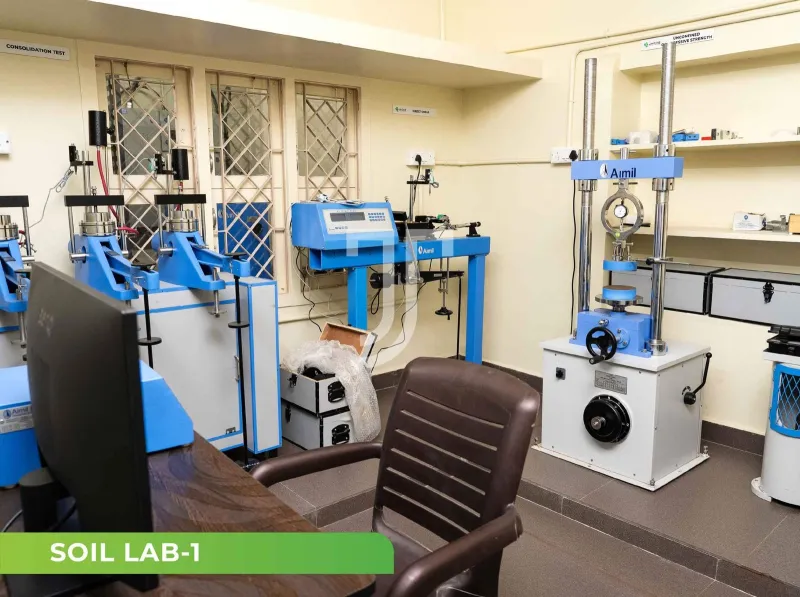
Photo: concrete specification engineer technical blueprint construction material testing lab, via jacobengineers.in
Concrete looks forgiving. It flows, it sets, it hardens—and for a while, almost any mix will appear to perform adequately. The problems reveal themselves later: a coastal parking structure showing rebar corrosion after three years, a desert highway experiencing thermal cracking after two winters, a commercial slab exhibiting alkali-silica reaction that wasn't detected until the surface began to map-crack and spall.
The specification decisions that lead to these failures are often made quickly, with reference to minimum code compliance rather than site-specific engineering judgment. American contractors are not careless—they are, in many cases, working with specification frameworks that haven't kept pace with the environmental demands of modern construction, or with the advances in concrete formulation that have emerged from markets with more rigorous performance requirements.
Turkish concrete engineering, refined through decades of building across seismically active zones, aggressive marine environments, and extreme thermal ranges, offers a set of technical answers to problems that American builders encounter regularly. Below, Istanbul Beton's technical team identifies seven of the most consequential specification errors seen in US construction—and the formulation principles that resolve them.
Mistake 1: Specifying Minimum Compressive Strength Without Considering Durability Class
American specifications frequently anchor on compressive strength—4,000 psi, 5,000 psi—as the primary performance criterion. Compressive strength matters, but it is an incomplete proxy for long-term durability. A mix can achieve high compressive strength while remaining highly permeable, making it vulnerable to chloride ingress, sulfate attack, and freeze-thaw deterioration.
Turkish engineering practice specifies concrete using both strength class and exposure class simultaneously, following frameworks aligned with European EN 206 standards. This dual-parameter approach mandates water-cement ratios, minimum cement content, and admixture requirements based on the actual environmental conditions the structure will face—not just the load it will carry.
The consequence: Structures in humid or coastal climates specified solely by compressive strength frequently show premature deterioration. Rebar corrosion begins years ahead of design life.
The fix: Istanbul Beton's formulations incorporate durability-class logic into every mix design. Specifying exposure conditions alongside strength requirements produces concrete with the permeability profile appropriate for the environment—not just the structure.
Mistake 2: Underestimating Chloride Exposure in Coastal and De-icing Environments
Chloride-induced corrosion is the leading cause of premature concrete infrastructure failure in the United States. The American Concrete Institute's own data acknowledges that billions of dollars in annual maintenance costs are attributable to chloride penetration in coastal structures and bridge decks exposed to de-icing salts.
Despite this, many US specifications for coastal construction do not mandate sufficiently low water-cement ratios, adequate cover depths, or supplementary cementitious materials (SCMs) with proven chloride-binding capacity.
The consequence: A beachfront condominium in Florida or a bridge deck in the Rust Belt can begin showing rebar staining and surface cracking within five to eight years when chloride resistance is not explicitly engineered into the mix.
The fix: Istanbul Beton's coastal and marine-grade formulations incorporate blast furnace slag and fly ash at optimized replacement ratios, reducing the concrete's chloride diffusion coefficient substantially below what ordinary Portland cement mixes achieve. These are not experimental approaches—they reflect standard practice in Turkish coastal construction, where the Black Sea, Marmara, and Aegean environments demand proven chloride resistance.
Mistake 3: Ignoring Thermal Mass and Coefficient of Thermal Expansion in Desert and High-Altitude Climates
In markets like Arizona, Nevada, New Mexico, and Colorado, concrete structures experience dramatic diurnal temperature swings—sometimes exceeding 50°F between daytime highs and nighttime lows. Over years, this cycling induces fatigue in concrete that wasn't formulated to accommodate it. The result is microcracking, joint failure, and accelerated surface deterioration.
The consequence: Highway pavements and commercial slabs in high-desert environments can degrade significantly faster than design life projections suggest, generating maintenance costs that erode project ROI.
The fix: Turkish formulation practice for thermally demanding environments adjusts aggregate selection and cement type to manage the coefficient of thermal expansion. Shrinkage-compensating admixtures and optimized curing protocols are standard elements of the mix design process—not afterthoughts. Istanbul Beton applies these principles to produce mixes specifically engineered for wide-range thermal cycling.
Mistake 4: Treating Alkali-Silica Reaction (ASR) as a Regional Anomaly
Alkali-silica reaction—the expansive chemical process that occurs when reactive silica in aggregates interacts with alkalis in cement—is widely distributed across American geology. Yet many US project specifications do not include ASR mitigation as a standard requirement, treating it as a problem relevant only to certain regions.
The reality is that ASR risk depends on both aggregate reactivity and the alkali content of the cement used, and both variables require explicit evaluation.
The consequence: ASR manifests slowly—often over five to fifteen years—making it easy to overlook at specification time and difficult to remediate once it begins. Map cracking, gel exudation, and structural expansion can compromise both aesthetics and structural integrity.
The fix: Istanbul Beton routinely specifies low-alkali cement and incorporates pozzolanic SCMs—particularly natural zeolite, which is abundant in Turkish geology and highly effective at suppressing ASR—as standard practice. For American projects where aggregate reactivity is a concern, this formulation approach provides a technically validated mitigation pathway.
Mistake 5: Specifying Standard Admixtures Without Accounting for Local Water Chemistry
Water chemistry varies significantly across American regions, and it interacts with admixtures in ways that can affect setting time, workability, and long-term performance. Contractors who use standard admixture packages without calibrating for local water chemistry—particularly in areas with high sulfate content or elevated dissolved solids—can encounter unexpected performance variability.
The consequence: Inconsistent set times, reduced workability, and in severe cases, sulfate attack that compromises the cement paste matrix over time.
The fix: Turkish concrete engineering practice treats admixture selection as a site-specific exercise, not a catalog default. Istanbul Beton's technical team conducts mix design verification that accounts for water chemistry interactions, ensuring that admixture systems perform as intended in the actual project environment.
Mistake 6: Neglecting Early-Age Curing in Hot and Low-Humidity Conditions
Curing is the most frequently compromised phase of concrete construction in American markets—and the consequences are disproportionately severe in hot, dry climates. Plastic shrinkage cracking, reduced surface strength, and elevated permeability are all direct results of inadequate moisture retention during early hydration.
The consequence: In markets like the Southwest, Gulf Coast, and inland Southeast, improperly cured concrete can lose 20 to 30 percent of its potential surface strength, dramatically reducing wear resistance and chloride resistance in the very zone most exposed to environmental attack.
The fix: Istanbul Beton's mix designs for warm-climate applications incorporate internal curing agents and shrinkage-reducing admixtures as standard components, reducing dependence on field curing practices that are difficult to control consistently. This approach reflects the Turkish construction industry's experience building in the hot, arid conditions of Anatolia.
Mistake 7: Selecting Cement Type Based on Availability Rather Than Chemistry
In practice, many American contractors specify Type I/II Portland cement because it is what their local supplier stocks—not because it is the optimal binder for their project's exposure conditions. Type I/II is a capable general-purpose cement, but it is not always the right choice for sulfate-bearing soils, aggressive marine environments, or mass concrete applications where heat of hydration is a concern.
The consequence: Structures built in sulfate-rich soils with ordinary Portland cement can experience progressive deterioration of the cement paste matrix—a failure mode that is expensive to remediate and entirely preventable.
The fix: Istanbul Beton's product range includes cement types and blended cement formulations specifically matched to exposure conditions. Sulfate-resistant formulations, low-heat blends for mass concrete, and high-SCM mixes for aggressive environments are standard catalog items—not custom orders.
Specification Is Where Performance Is Won or Lost
The gap between adequate concrete and genuinely high-performing concrete is almost always established at the specification stage—before a single cubic yard is batched. The mistakes outlined above are not failures of construction execution. They are failures of technical precision at the procurement and design phase.
Istanbul Beton's role is not simply to supply concrete. It is to bring the depth of Turkish engineering practice to American projects that deserve better than minimum-code compliance. For contractors ready to close the specification gap, the conversation starts with understanding what your project's environment actually demands—and formulating accordingly.