Green Concrete Is No Longer a Compromise: Istanbul's Low-Carbon Innovations Redefining Sustainable Construction
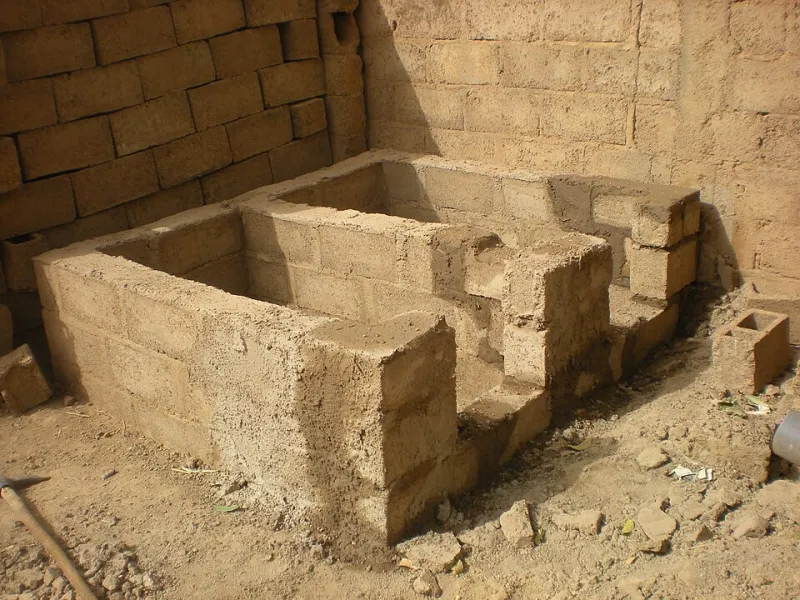
Photo: SuSanA Secretariat, CC BY 2.0, via Wikimedia Commons
For much of the past two decades, "sustainable concrete" was a phrase that made structural engineers quietly nervous. The early iterations of low-carbon mixes — characterized by high supplementary cementitious material (SCM) substitution rates and recycled aggregate content — sometimes delivered inconsistent performance, particularly in cold climates or high-load applications. The perception that environmental responsibility came at the expense of structural integrity was slow to fade.
That perception is now outdated. In 2024, the concrete manufacturing sector in Istanbul has reached a level of technical maturity where low-carbon formulations are not a concession to environmental preference — they are a genuine advancement in material performance. For American contractors navigating increasingly stringent environmental regulations and client sustainability mandates, this development is worth understanding in detail.
Why Istanbul Has Become a Center for Concrete Innovation
Turkey's position as a major exporter of construction materials has created sustained commercial pressure on its manufacturing sector to innovate. Istanbul, as the country's industrial and logistics hub, hosts a concentration of concrete producers who have invested heavily in research and development over the past decade — partly in response to European Union environmental directives that have influenced Turkish industry standards, and partly because global export markets increasingly require sustainability documentation as a condition of procurement.
The result is a manufacturing ecosystem that has developed practical, scalable solutions to the carbon problem in concrete — solutions that are now available to project teams in the United States through suppliers like Istanbul Beton.
The Carbon Problem in Conventional Concrete
Ordinary Portland cement (OPC), the binding agent in conventional concrete, is produced through a high-temperature calcination process that releases CO2 both from the combustion of fossil fuels and from the chemical decomposition of limestone. The production of one metric ton of OPC generates approximately 0.8 to 0.9 metric tons of CO2 — making cement manufacturing one of the most carbon-intensive industrial processes on the planet.
At the scale of a single large commercial project, this adds up quickly. A 200,000-square-foot office building might consume 3,000 to 5,000 cubic yards of concrete across its foundations, structural frame, and flatwork. The embodied carbon in that concrete, using conventional OPC-based mixes, can represent a substantial fraction of the project's total lifecycle emissions — a figure that is increasingly scrutinized under LEED v4.1 and the emerging LEED v5 framework, both of which reward low-embodied-carbon material choices with meaningful credit contributions.
Supplementary Cementitious Materials: The Foundation of Low-Carbon Formulation
The most established pathway to lower-carbon concrete involves replacing a portion of OPC with supplementary cementitious materials — industrial byproducts that possess cementitious or pozzolanic properties. Fly ash, a byproduct of coal combustion, and ground granulated blast-furnace slag (GGBS), derived from steel production, are the most widely used SCMs in both Turkish and American concrete production.
Istanbul Beton's low-carbon formulations incorporate carefully calibrated proportions of GGBS and fly ash to achieve OPC replacement rates of 30 to 50 percent in applicable mix designs, without sacrificing the 28-day compressive strength thresholds required by structural specifications. In many cases, high-SCM mixes exhibit superior long-term strength development compared to OPC-only formulations, as the pozzolanic reaction continues to densify the cement matrix over months rather than weeks.
For LEED projects targeting credits under the Materials and Resources category — specifically MR Credit: Building Product Disclosure and Optimization — the documented use of SCMs and the associated reduction in embodied carbon (expressed as a Global Warming Potential value per the EN 15804 environmental product declaration standard) provides quantifiable evidence of environmental performance.
Recycled Aggregate: Closing the Loop on Construction Waste
Beyond cementitious content, the aggregate fraction of concrete — which constitutes roughly 60 to 75 percent of mix volume by weight — represents another significant opportunity for environmental improvement. Istanbul's concrete manufacturers have developed processing infrastructure to incorporate recycled concrete aggregate (RCA) derived from demolished structures, replacing a portion of virgin quarried stone.
When RCA is properly processed — crushed, screened, and tested for contaminant content and particle size distribution — it can be incorporated at substitution rates of 20 to 30 percent in non-structural applications such as site concrete, pavement base courses, and non-load-bearing slabs without meaningful performance degradation. For structural applications, lower substitution rates in the range of 10 to 15 percent are appropriate, with careful attention to water absorption characteristics that differ from virgin aggregate.
For American contractors working on projects pursuing LEED credits for recycled content or regional material sourcing, the use of verified RCA-inclusive mixes provides a documented contribution to those credit categories.
Alkali-Activated Binders: The Next Frontier
Beyond SCM substitution, Istanbul's advanced manufacturers are investing in alkali-activated concrete systems — sometimes referred to as geopolymer concrete — which eliminate Portland cement entirely, replacing it with an alkali-activated combination of fly ash or slag. These systems can achieve OPC-equivalent or superior compressive strength while reducing CO2 emissions by 40 to 80 percent compared to conventional mixes.
While alkali-activated systems are not yet universally accepted under US building codes for structural applications without project-specific engineering review, they represent a technically viable option for a growing range of non-structural and infrastructure applications. Istanbul Beton is positioned to provide technical documentation and mix design data to support the engineering review process for clients exploring these options.
Practical Steps for US Contractors
For American project teams looking to integrate these innovations into upcoming bids, the pathway is more straightforward than it might appear. The first step is requesting Environmental Product Declarations (EPDs) for any concrete products under consideration — a request that Istanbul Beton is equipped to fulfill, as our formulations are documented under the EN 15804 framework.
The second step is engaging the project structural engineer of record early in the specification process to evaluate low-carbon mix substitution options against the project's strength and durability requirements. In most commercial construction scenarios, a 30 to 40 percent reduction in embodied carbon is achievable without any change to the structural specification.
Sustainability in construction is no longer a niche preference held by a minority of project owners. It is becoming a baseline expectation across institutional, municipal, and commercial development sectors throughout the United States. Istanbul Beton's low-carbon product line is designed for contractors who want to meet that expectation with confidence — backed by technical documentation, verified performance data, and a manufacturing process that treats environmental responsibility as an engineering discipline rather than a marketing claim.