What Concrete Failures Actually Cost: The Long-Term Price of Skipping Premium Standards

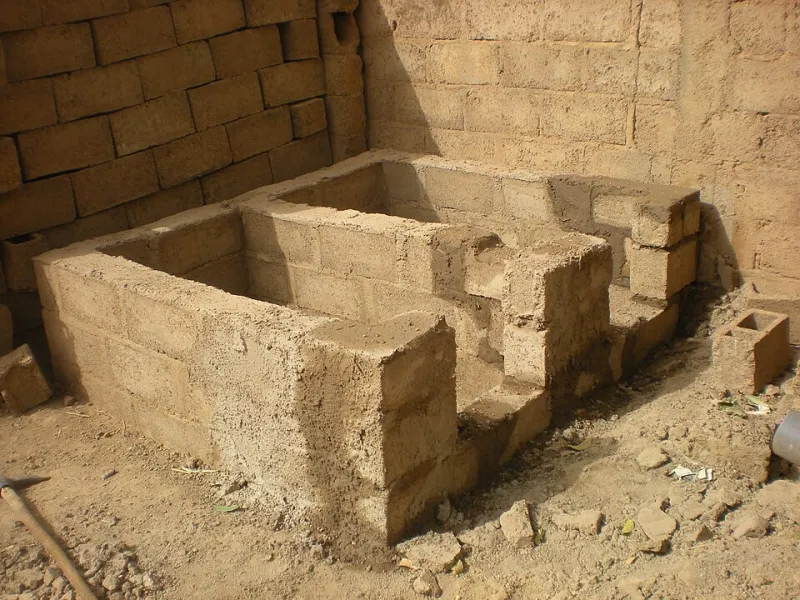
Photo: W.carter, CC BY-SA 4.0, via Wikimedia Commons
In the American construction industry, the pressure to reduce upfront material costs is relentless. Project managers, general contractors, and developers routinely scrutinize every line item, and concrete — one of the most fundamental inputs in any build — frequently becomes a target for cost-cutting. The logic seems straightforward: concrete is concrete. How different can it really be?
The answer, as a growing number of US contractors have discovered at significant expense, is: profoundly different.
The Anatomy of a Concrete Shortcut
Substandard concrete formulation typically manifests in several ways. Suppliers may reduce the proportion of Portland cement in the mix to lower material costs, substitute lower-grade aggregates, or skip admixtures that control workability, curing time, and long-term durability. In some cases, the problem is not the mix itself but the curing process — inadequate moisture retention during the critical early days after placement can reduce the final compressive strength of a slab by 20 to 40 percent, according to data published by the American Concrete Institute.
These compromises are rarely visible at the time of pour. A slab that looks perfectly sound at project handover may begin showing hairline cracks within 18 months, spalling surfaces within three years, and structural compromise within a decade. By that point, the original supplier is long gone from the conversation, and the contractor is left managing warranty claims, litigation exposure, and the reputational damage that follows a high-profile failure.
Case Study: The Cost of a Failed Parking Structure
Consider the documented experience of a mid-sized commercial developer in the Southeast who completed a multi-level parking structure in 2019 using a locally sourced concrete mix that came in roughly 12 percent below the next-lowest bid. Within two years, the structure required emergency patching across three levels due to accelerated carbonation and rebar corrosion — a direct consequence of insufficient concrete cover depth and a mix with inadequate chloride resistance.
The remediation contract totaled approximately $340,000. The original savings on concrete materials had amounted to just over $47,000. The net loss on that single decision exceeded a quarter of a million dollars, before accounting for the legal costs associated with a tenant dispute over parking access during the repair period.
This is not an isolated anecdote. A 2022 analysis by the Construction Industry Institute estimated that concrete-related rework and premature repair across US commercial projects costs the industry between $4 billion and $6 billion annually. A significant portion of that figure traces back to specification shortcuts made at the procurement stage.
What Turkish and European Standards Actually Require
At Istanbul Beton, our formulations are developed in alignment with both Turkish Standards Institute (TSE) requirements and the broader framework established by European EN 206 concrete standards — benchmarks that are, in several important respects, more demanding than the minimum thresholds set by ASTM International specifications commonly referenced in US contracts.
EN 206 mandates detailed exposure class classifications, requiring concrete producers to engineer specific resistance to freeze-thaw cycles, sulfate attack, chloride ingress, and alkali-silica reaction based on the intended service environment. This is not a checkbox exercise. It requires producers to document mix design rationale, conduct third-party compressive strength testing at 28 and 56 days, and maintain traceability records for every batch.
For American contractors importing or specifying materials from Istanbul Beton, this documentation trail is a tangible asset. It provides defensible evidence of specification compliance — the kind of paper trail that matters enormously when a project owner's engineer is reviewing a warranty claim or when a dispute reaches arbitration.
The ROI Calculation That Most Procurement Teams Miss
The financial case for premium concrete is most clearly expressed not in the cost per cubic yard, but in the service life of the structure. A pavement or slab designed for a 50-year service life using a properly specified, high-durability mix may cost 8 to 15 percent more at the time of placement. Over that same 50-year period, however, the maintenance and repair expenditure on a lower-grade installation typically exceeds the original price differential by a factor of three to five.
This calculation becomes even more compelling when project financing is factored in. Developers carrying construction loans at current interest rates cannot afford unplanned repair cycles that extend their exposure period. A single remediation event that delays certificate of occupancy by six weeks can cost more in financing charges alone than the entire premium paid for a superior concrete specification.
Protecting Your Contracts and Your Reputation
Beyond the direct financial exposure, there is a less quantifiable but equally real cost to concrete failures: the erosion of contractor reputation in regional markets. American commercial construction, particularly in sectors like healthcare, education, and municipal infrastructure, operates on a relationship-driven procurement model. General contractors who develop a pattern of post-completion repair calls find themselves progressively excluded from the project pipelines that sustain long-term business growth.
Istanbul Beton exists precisely because the global construction market has room — and genuine demand — for suppliers who treat quality standards as a competitive differentiator rather than a compliance burden. Our clients across North America have found that specifying to Turkish and European quality benchmarks is not just a technical decision. It is a business strategy.
The concrete that goes into a foundation today will be performing — or failing — for decades. The question every contractor should be asking at the procurement stage is not "how much can I save right now?" but "what is this decision going to cost me in year five?" The answer to that question, for contractors who have experienced both sides of the equation, is rarely ambiguous.