Built to Endure: What Istanbul's Climate-Forged Concrete Formulas Mean for American Contractors Facing Extreme Conditions
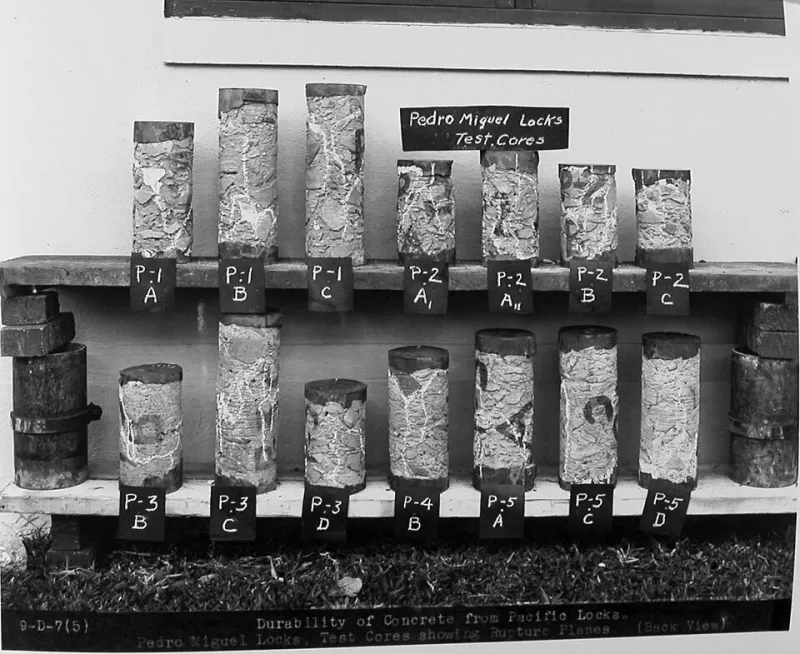
Photo: Panama Canal Company. 7/1/1951-10/1/1979, Public domain, via Wikimedia Commons
When Climate Becomes a Laboratory
Istanbul is not a forgiving city for concrete. Positioned at the boundary of Europe and Asia, the city endures a climatic range that few metropolitan areas match: summer temperatures regularly exceeding 95°F, winter conditions that bring freeze-thaw cycles to exposed structures, persistent humidity driven by the Bosphorus and the Sea of Marmara, and chronic salt exposure affecting coastal and bridge infrastructure throughout the urban fabric.
For Turkish concrete producers, these conditions have not simply been obstacles to manage. They have served as a continuous, real-world testing environment that has pushed formulation science forward over generations. The concrete mixes refined in Istanbul's demanding context carry embedded durability intelligence that laboratory testing alone cannot replicate. Istanbul Beton's product development draws directly from this accumulated knowledge — and the result is a material profile with distinct advantages for US contractors operating in climatically challenging regions.
Understanding the Freeze-Thaw Problem
For contractors working in the Northern United States — from the Great Lakes region through New England and across the Upper Midwest — freeze-thaw durability is not an abstract engineering concern. It is the single most common mechanism by which concrete infrastructure deteriorates prematurely, generating costly repair cycles and liability exposure.
When water infiltrates concrete's pore structure and subsequently freezes, it expands by approximately nine percent. Repeated over hundreds of cycles across a structure's service life, this expansion generates internal tensile stresses that exceed the material's capacity and initiate cracking. Once cracking begins, the process accelerates as larger water volumes gain access to the structure's interior.
Istanbul Beton's formulations address this mechanism through a combination of reduced water-to-cementite ratios, carefully calibrated air-entraining admixture systems, and pozzolanic supplementary cementite materials — including specific volcanic ash sources available in Turkey — that densify the paste matrix and reduce permeable porosity. The result is a concrete microstructure that limits the volume of freezable water available within the system, reducing the magnitude of internal expansion stress per cycle.
Performance data from accelerated freeze-thaw testing conducted under ASTM C666 protocols — the standard procedure used by US transportation departments and structural engineers — shows Istanbul Beton's cold-climate formulations maintaining relative dynamic modulus values above 90 percent after 300 freeze-thaw cycles. That figure represents meaningful durability margin compared to standard domestic mixes, which frequently show measurable degradation beginning between 150 and 200 cycles under the same test conditions.
Coastal Durability: The Salt Exposure Challenge
Along the US Atlantic and Gulf Coasts, and increasingly in Pacific coastal developments, chloride-induced reinforcement corrosion presents a parallel durability crisis. Salt spray, tidal exposure, and deicing chemical runoff all introduce chloride ions into concrete systems. When those ions reach embedded steel reinforcement in sufficient concentration, they disrupt the passive oxide layer that normally protects steel in alkaline concrete environments, initiating corrosion that can cause catastrophic spalling and structural compromise.
Istanbul's marine infrastructure — bridges, port facilities, coastal retaining systems — operates under precisely these conditions. The city's engineers and concrete producers have developed an intimate understanding of chloride transport mechanisms in concrete, and that expertise is embedded in Istanbul Beton's coastal-grade product lines.
Key formulation strategies include high-slag cement blends that significantly reduce chloride diffusion coefficients, surface treatment systems that create hydrophobic barriers at the concrete skin, and mix designs that achieve low water-to-binder ratios without compromising workability through advanced polycarboxylate superplasticizer technology. US coastal contractors who have reviewed Istanbul Beton's technical data sheets for these products note that the chloride migration coefficients — expressed in the NT BUILD 492 rapid migration test format familiar to US bridge engineers — are competitive with the most stringent domestic high-performance concrete specifications.
Desert Heat and Thermal Cycling: The Southwest Dimension
The durability conversation in the United States extends beyond cold and coastal environments. Contractors working in the Desert Southwest — Arizona, Nevada, New Mexico, and inland Southern California — contend with a different but equally demanding set of conditions: extreme peak temperatures, dramatic diurnal temperature swings, and the alkali-silica reactivity risks associated with many regionally available aggregates.
High ambient temperatures during placement create risks of premature stiffening, reduced strength gain, and plastic shrinkage cracking. Istanbul Beton's hot-weather formulations incorporate retarding admixture systems calibrated for extended workability windows without the strength penalties that result from excessive water addition in the field. Supplementary cementite materials, including silica fume and metakaolin components available through Istanbul Beton's product range, also contribute to alkali-silica reactivity mitigation — a documented concern in several Southwestern aggregate sources.
"What impressed our team was the consistency between the technical documentation and actual field performance," noted one Arizona-based civil engineer who evaluated Istanbul Beton's desert-climate formulations for a transportation project. "The heat-of-hydration profiles were exactly as specified, which made our pour scheduling significantly more predictable."
The Manufacturing Philosophy Behind the Performance
Durability advantages of this kind do not emerge from a single formulation decision. They reflect a manufacturing philosophy that prioritizes long-term material performance over short-term production economy. Istanbul Beton's production processes involve tighter quality control tolerances than many commodity concrete producers maintain, more rigorous incoming raw material testing, and a product development cycle that incorporates field performance feedback from diverse climatic deployments.
The company's position in Istanbul — a city where concrete infrastructure must perform across a genuinely broad climatic envelope — creates an organizational culture oriented toward durability engineering rather than minimum specification compliance. That orientation is evident in the technical depth of the product documentation provided to US engineering partners and in the willingness of Istanbul Beton's technical staff to engage directly with project-specific performance questions.
Translating Technical Advantage into Project Value
For US contractors, the practical implication of superior durability performance is not merely academic. Extended service life reduces lifecycle maintenance costs, lowers the probability of premature repair interventions, and supports more favorable long-term project economics. In public infrastructure projects where lifecycle cost analysis is increasingly required in procurement evaluation, materials with demonstrably superior durability profiles carry measurable value beyond their initial unit cost.
In private commercial and residential development, reduced maintenance liability and extended warranty coverage supported by durable material performance translate directly into competitive differentiation for contractors who can document their material selection rationale.
Istanbul Beton's technical team works with US project engineers to develop project-specific documentation packages that support both specification approval and lifecycle cost arguments. The combination of verifiable performance data and direct technical support is designed to make the case for superior durability concrete accessible within standard US project approval workflows.
Durability as a Competitive Advantage
The concrete that has served Istanbul's demanding infrastructure for generations carries within it a performance heritage that American contractors can draw upon directly. For those working in the harshest climatic zones of the United States — whether facing the freeze-thaw severity of a Minnesota winter, the chloride saturation of a Florida coastal project, or the thermal intensity of a Phoenix summer — Istanbul Beton's formulation expertise represents a genuinely differentiated technical resource.
In an industry where material performance failures are expensive and reputational damage is lasting, the durability margin embedded in Istanbul's climate-refined concrete formulas is not a minor consideration. It is a foundational project decision.