Breaking the Delivery Obsession: Why Holding International Concrete Inventory Wins More Bids Than It Costs
Photo: PattayaPatrol, CC BY-SA 4.0, via Wikimedia Commons
American construction has a delivery religion, and it is just-in-time. Concrete arrives when the pump is running, not before. Inventory is treated as waste, warehousing as sin, and any contractor who stockpiles material is assumed to be managing cash badly.
This doctrine made sense in a world of dense domestic supply networks and stable lead times. That world is gone. And the contractors who cling to just-in-time concrete are paying for a fragility they can no longer afford—while their competitors quietly profit from the opposite strategy.
The Fragility Tax
Just-in-time concrete has a hidden price tag that never appears on a purchase order. It appears as:
- Pour delays when a supplier's batch fails QC
- Weather windows missed waiting on a rescheduled delivery
- Premium pricing on emergency replacement orders
- Crew standby costs that average $2,500–$8,000 per day on mid-size commercial projects
A single delayed critical-path pour can erase the margin on an entire phase. Multiply that across a project portfolio, and the "efficiency" of zero inventory starts to look like a subscription to volatility.
The Contrarian Math
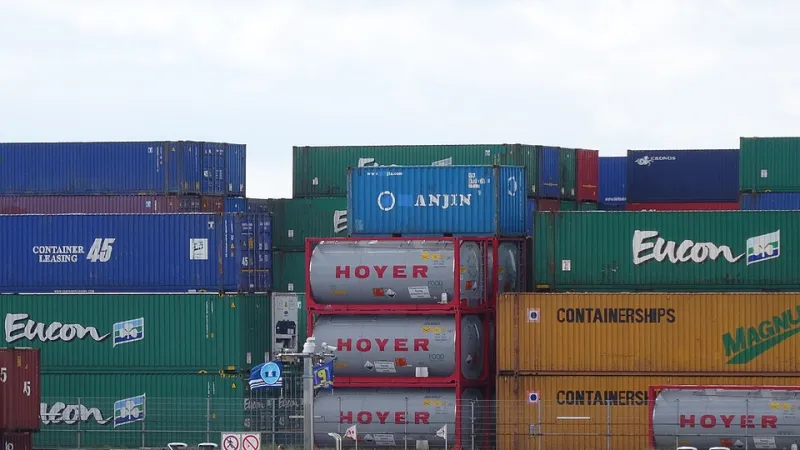
Now run the alternative. A contractor who pre-schedules a container of premium Turkish concrete materials, staged at a regional warehouse, carries three costs the JIT purist avoids: capital tied up in material, storage, and financing.
Back-of-the-envelope, on a $60,000 container order:
- Carrying cost: roughly 2–4% of material value over a 90-day hold—call it $2,000
- Warehouse and handling: $1,500–$3,000 for the period
- Total exposure: approximately $5,000
Now the return side. That staged inventory lets the contractor guarantee pour dates in bids where JIT competitors must hedge with contingency allowances—or lose the job entirely. On a $2 million bid, a 2% contingency for material risk is $40,000. A competitor holding verified, on-hand material can bid $30,000 lower, win the contract, and still out-earn the hedged bid.
One won job pays for a year of carrying costs. One avoided standby week pays for a quarter of them.
Why International Sourcing Makes Inventory Viable
The traditional objection to holding concrete inventory was quality degradation and unit cost. Both objections have weakened. Modern Turkish formulations ship in moisture-protected packaging engineered for long transit, with documented batch traceability that makes stored material as verifiable as fresh material. And the unit-cost advantage of sourcing from Istanbul is substantial enough that carrying costs barely dent the savings.
In effect, the global supply chain has converted inventory from a liability into a strategic reserve—one that competitors using purely domestic JIT sourcing cannot match on either price or certainty.
The Bid That Changes the Conversation
Here is the quiet truth about procurement: general contractors awarding work care less about your delivery philosophy than about your ability to promise dates and keep them. A subcontractor who can commit to a pour schedule with material already staged is offering something rarer than a low number. They are offering certainty.
Just-in-time was built for a supply chain that no longer exists. The contractors who recognize that first—and who are willing to hold inventory the old doctrine calls waste—will be the ones signing the next round of contracts. The heresy, it turns out, pays.