From Istanbul to Your Jobsite: A Contractor's Step-by-Step Guide to International Concrete Sourcing

Photo by Photo by Ali Mkumbwa on Unsplash on Unsplash
The idea of importing construction materials from overseas can trigger immediate skepticism among American contractors. The instinct is understandable. Construction projects operate on fixed timelines, tight budgets, and unforgiving quality specifications. Introducing an international supply chain into that equation seems, at first glance, like adding unnecessary complexity to an already demanding process.
But that instinct deserves scrutiny. Domestic sourcing has its own lead time vulnerabilities, quality inconsistencies, and cost unpredictability—particularly in a market where supply chain disruptions have become a structural feature rather than an anomaly. When international sourcing is managed correctly, with the right supplier and the right processes in place, it can deliver superior materials at competitive total cost with no greater schedule risk than a domestic procurement arrangement.
The following guide is designed for US contractors who are seriously evaluating Turkish concrete materials and want a clear, honest picture of how the process works.
Step 1: Define Your Technical Requirements Before Any Supplier Conversation
The single most important preparation a contractor can undertake before engaging any supplier—domestic or international—is a precise technical specification. This means identifying the required compressive strength class, any special performance requirements (freeze-thaw resistance, sulfate resistance, low permeability), the applicable ASTM or project-specific standards, and the volume and delivery schedule the project demands.
This documentation serves multiple purposes in an international procurement context. It allows Istanbul Beton's technical team to confirm product alignment quickly, eliminates ambiguity during the quotation process, and provides the baseline against which quality verification is conducted. Contractors who approach international sourcing with vague requirements create problems for themselves regardless of how competent their supplier may be.
If your project specifications reference ASTM C150 for Portland cement, ASTM C618 for pozzolanic additives, or ACI 318 structural concrete requirements, bring those documents to the initial conversation. Istanbul Beton maintains formulations and testing documentation aligned with these frameworks.
Step 2: Understand How Turkish Certifications Translate to US Requirements
A common concern among American project engineers is whether Turkish product certifications carry meaningful weight in a domestic regulatory context. This is a fair question, and the answer requires some nuance.
Turkish concrete manufacturers operate under a technical standards framework administered by the Turkish Standards Institution (TSE), which is itself aligned with European EN standards. EN standards and ASTM standards address the same performance characteristics—compressive strength, workability, durability—but use different test methods and classification systems. Third-party testing conducted against ASTM protocols is available and, in most cases, is standard practice for Turkish manufacturers with established export programs.
Istanbul Beton provides test reports from accredited laboratories documenting product performance against applicable ASTM standards. For projects requiring material approval from a structural engineer or building department, this documentation forms the basis for the submission. Contractors should verify specific approval requirements with their project engineer early in the procurement process, before finalizing sourcing decisions.
Step 3: Build Your Lead Time Into the Project Schedule—Not Against It
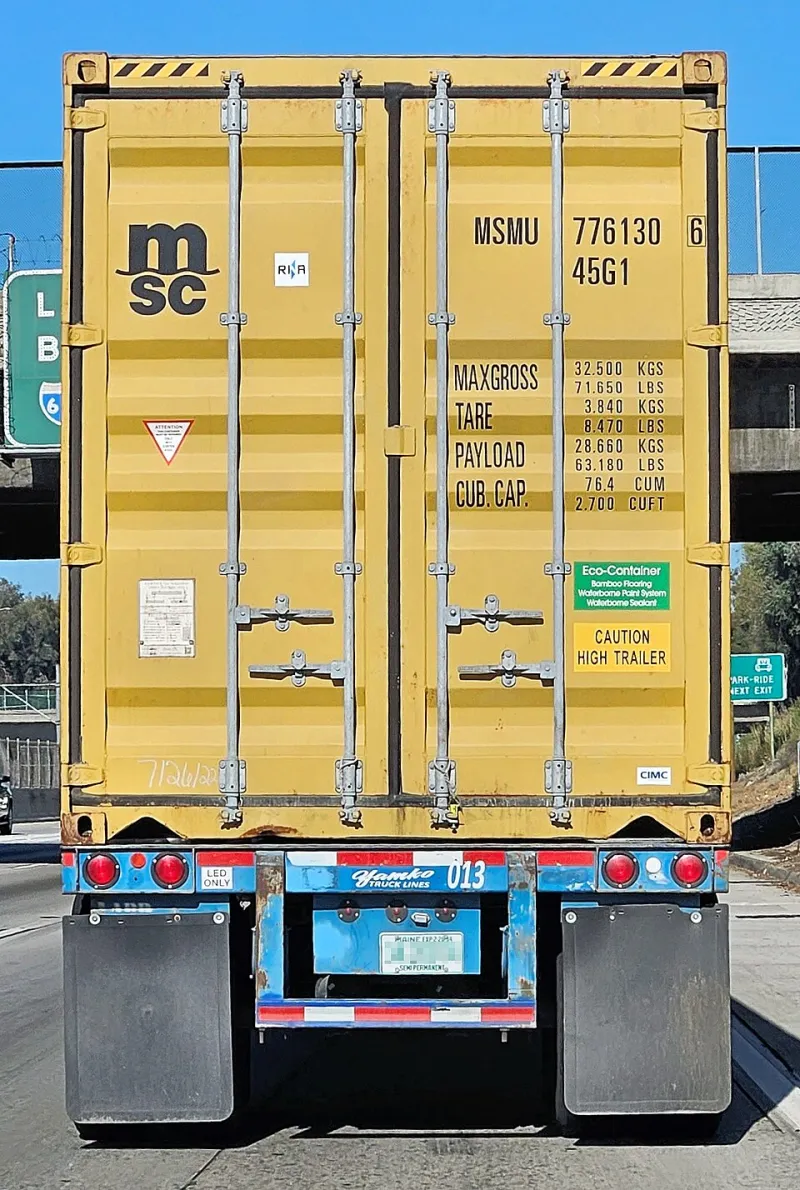
Lead time management is the area where international sourcing most frequently encounters problems, and it is almost always the result of planning failures rather than supplier failures. Concrete materials imported from Istanbul will require transit time that domestic orders do not. Ocean freight from Turkish ports to major US East Coast terminals typically ranges from 18 to 25 days under normal operating conditions. West Coast delivery adds additional transit time depending on routing.
These timelines are predictable and manageable when procurement is initiated at the appropriate project stage. The practical recommendation is to treat international material orders the same way you would treat long-lead structural steel or specialty mechanical equipment: identify the need early, place the order with adequate buffer, and do not rely on international sourcing for materials that may be needed on short notice.
Istanbul Beton maintains production scheduling visibility that allows clients to confirm manufacturing completion dates and vessel booking windows in advance. For contractors managing multiple concurrent projects, consolidated shipments can reduce per-unit freight costs and simplify logistics coordination.
Step 4: Establish Quality Control Checkpoints Before Materials Leave the Factory
Quality verification for imported construction materials should occur at multiple stages, not solely upon arrival at the project site. By the time a non-conforming shipment reaches a US port, the options available to a contractor are limited and expensive. The goal is to identify and resolve any quality issues while the materials are still accessible in Istanbul.
A structured quality control protocol for international concrete material procurement includes the following checkpoints:
Pre-production review: Confirm that the mix design or product formulation submitted for approval matches the specification requirements. Review the technical data sheet and available test history before production begins.
In-process production monitoring: For significant orders, request batch production records documenting raw material sources, mix proportions, and any deviations from the approved design. Istanbul Beton maintains production documentation as a standard practice.
Pre-shipment testing: Independent third-party sampling and testing of production batches prior to container loading provides the most reliable quality assurance checkpoint. Test results should be reviewed and approved before the shipment is released.
Arrival inspection: Upon delivery to the US destination, a visual inspection and documentation review confirm that the shipment matches the pre-shipment records. Retain samples for any required project documentation.
This protocol adds modest cost and time to the procurement process. It also virtually eliminates the risk of receiving non-conforming materials on a project with a fixed completion date.
Step 5: Clarify Total Cost—Not Just Unit Price
The competitive advantage of Turkish concrete materials is most clearly visible when total landed cost is calculated accurately. Unit price comparisons that exclude freight, customs duties, port handling charges, and inland transportation are misleading and frequently cause contractors to underestimate the value of international sourcing.
Istanbul Beton provides cost proposals that itemize all material, logistics, and documentation components, enabling direct comparison against domestic alternatives on a true apples-to-apples basis. In most cases, the premium performance characteristics of Turkish formulations—higher compressive strength, superior durability, more consistent batch quality—justify a higher unit price even before logistics considerations. When total landed cost is competitive, the value proposition becomes straightforward.
Contractors should also account for downstream cost offsets: reduced material volume requirements when higher-strength products are specified, lower long-term maintenance obligations, and the reduction in warranty or rework risk that comes with more consistent material quality.
Step 6: Establish a Communication Protocol With Your Supplier
Successful international procurement depends on clear, consistent communication between the contractor and the supplier throughout the order cycle. Establish primary contacts on both sides, agree on the frequency and format of status updates, and define escalation procedures for issues that require prompt resolution.
Istanbul Beton assigns dedicated project coordinators to export orders, providing US clients with a single point of contact for production status, shipping documentation, and technical inquiries. This structure reduces the communication overhead that can make international procurement feel more burdensome than it needs to be.
The Bottom Line for US Contractors
International concrete sourcing is not a shortcut or a gamble. It is a procurement strategy that, when executed with appropriate planning and the right supplier partnership, delivers access to technically superior materials at competitive cost. The process has well-defined steps, manageable risks, and clear documentation requirements.
American contractors who have integrated Istanbul Beton into their supply chain have done so not out of necessity but out of deliberate quality strategy. The materials perform. The process works. The question is whether your next project is the right opportunity to find out.