Stress-Testing the Concrete Supply Line: A Contingency Framework for a Volatile Trade Year
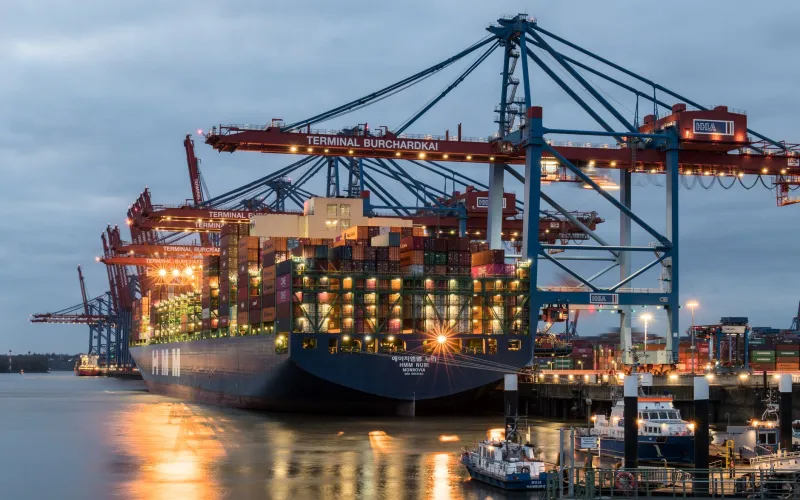
For most American contractors, concrete is a local commodity. The plant sits thirty minutes away, the dispatcher knows your superintendent by name, and the only genuine variable is the weather. Sourcing from Istanbul changes that arithmetic. Once material crosses an ocean, the supply line stops behaving like a delivery and starts behaving like a portfolio of risks, each capable of stopping a pour.
The 2026 trade environment has made that portfolio harder to ignore. Ocean freight rates have moved in wide bands, tariff schedules have been revised with limited notice, and exchange-rate swings have turned pricing conversations into monthly events. None of these developments is fatal on its own. Together, they make a strong case for one discipline: a written contingency plan, drafted before the first purchase order and reviewed while the project is still on schedule.
Begin With a Risk Register, Not a Gut Feeling
Contingency planning fails when it is conducted as a conversation. Put it on paper as a register with four columns: the risk, its likelihood, its schedule impact if it lands, and the lead time needed to detect it. For imported concrete, three families of risk deserve their own lines.
- Logistics. Vessel rollovers, port congestion, container shortages, chassis availability, rail connections inland, and customs examinations.
- Trade policy. Reclassification of goods, new duty measures, changes to certification or labeling requirements, and shifting inspection intensity at entry.
- Currency. Movement between the U.S. dollar and the Turkish lira, which changes your supplier's cost base even when your contract is denominated in dollars.
Score each line honestly. A risk with high impact but a two-week detection window is manageable. A risk with moderate impact and no detection window is the one that ends projects.
Port Disruptions: Map the Chokepoints, Not Just the Port
Contractors tend to name a single port of entry in their logistics plan and treat it as fixed. It is not. Labor negotiations, berth availability, channel depth, seasonal volume, and inland rail capacity all combine to make one gateway fast in March and slow in September.
A workable plan identifies a primary gateway, a secondary gateway, and the approximate cost and schedule penalty of diverting between them. East Coast and Gulf entry points behave differently from West Coast entry points, and an inland rail leg can absorb a port delay or amplify it depending on the season. Confirm in advance that your customs broker is licensed and operational at the backup location, because a diversion is worthless if the paperwork cannot follow the container.
Trade Policy: Plan for the Rate to Change Mid-Project
Importers who assume today's duty treatment will hold for the life of a project are making a bet they cannot price. The practical response is not prediction; it is preparation.
- Obtain a written tariff classification for the goods and keep it in the project file.
- Ask your broker to model landed cost at two or three duty scenarios, so the bid carries a visible allowance rather than a hidden one.
- Confirm the customs bond is sized for the largest single entry you may bring in, not the average.
- Keep documentation complete enough to support a post-entry refund claim if a classification is later adjusted.
A duty scenario table in the bid package also does something quieter: it tells the owner and the lender that you have thought about the exposure before they ask.
Currency: Dollar Pricing Does Not Eliminate Exchange Risk
An American buyer priced in dollars is shielded from day-to-day lira movement, but the shield has limits. The supplier's production costs, labor, energy, and inland freight are incurred in lira. When the exchange rate moves sharply, that margin pressure does not disappear; it migrates into quality shortcuts, schedule slippage, or a request to renegotiate.
The remedy is a bounded mechanism rather than an open-ended one. Fix pricing for a defined window, thirty or sixty days. If a price adjustment clause is unavoidable, index it to a published rate, cap the adjustment in both directions, and require written notice with a defined response period. Symmetry matters: a clause that only moves upward is a surcharge with better branding.
Contract Clauses That Allocate Risk Before It Arrives
Most supply disputes are not arguments about facts. They are arguments about who agreed to carry a risk that nobody named at signing. The following clauses deserve deliberate attention.
- Force majeure, defined narrowly, with a notice obligation and a duty to mitigate rather than a blanket excuse.
- Delay and liquidated damages, including how transit delay is treated separately from production delay.
- Title and risk transfer, stated explicitly by Incoterms 2020 rule rather than implied.
- Demurrage and detention, with a clear allocation of charges and a cap on the buyer's exposure.
- Suspension and termination, including convenience termination with a defined settlement formula.
- Step-in rights, allowing you to take assignment of in-transit goods or work-in-progress if the supplier falters.
- Governing law and dispute forum, agreed in advance and matched to the size of the contract.
Inventory Buffers: Usually the Cheapest Insurance Available
A finished-goods buffer is boring, and it is also the fastest form of contingency. Compare the carrying cost of a few weeks of material against the daily cost of an idle crew, a rented crane, and a liquidated damages clock, and the arithmetic tends to settle the argument quickly.
Structure the buffer in tiers. Domestic safety stock covers ordinary variance. In-transit inventory covers the shipping window. The two together should not exceed what your storage conditions can actually protect, which usually determines the ceiling more than budget does.
Qualify a Second Source Before You Need One
An alternate supplier you have not sampled is not an alternate supplier. Qualify the backup mix design, obtain independent test results, retain samples, and get the alternate approved in the submittal process while the primary source is performing well. The cost of that work is small; the cost of doing it during an active disruption is not.
Set Trigger Points and Rehearse
A contingency plan that requires a meeting to activate will not be activated. Define the indicators in advance: port dwell time beyond a stated threshold, a freight index move beyond a band, an exchange rate outside a range, an announced policy change affecting your classification. Attach a pre-authorized response to each trigger, name the person who decides, and review the register at a fixed cadence.
Once a quarter, walk the team through a scenario. Fifteen minutes of rehearsal reveals which assumptions are paper and which are structural.
The Takeaway
Contingency planning does not remove volatility from an international concrete program. It converts an unpredictable exposure into a priced, bounded, and managed one. In 2026, that conversion is the difference between a supplier relationship that holds under pressure and one that becomes the explanation for a missed schedule.